The South Sudan Medical Journal exists to inform, educate and positively influence the development of Health Services in South Sudan.
The Journal is published quarterly in February, May, August and November.
Vision
To see well-trained, skilled professionals delivering high quality healthcare to the population of the South Sudan and beyond
Mission
To publish research and clinical guidance that will positively influence the development of healthcare services in South Sudan and beyond.
Scope
SSMJ publishes all types of articles: original research, reviews, survey reports/KAP studies, discussions and commentaries as well as case studies, clinical guidance and letters to the editor, in all fields of medicine and public health.

The SSMJ is licensed under a
Creative Commons Attribution-NonCommercial 4.0 International License
eISSN 2309-4613
SSMJ is listed on the African Journals Online (AJOL) and Directory of Open Access Journals (DOAJ). Visit these sites to learn more.
Mailing List
Join our mailing list to receive timely notifications of our quarterly issues and other communications.
SSMJ New Email Address:
Latest Issue:
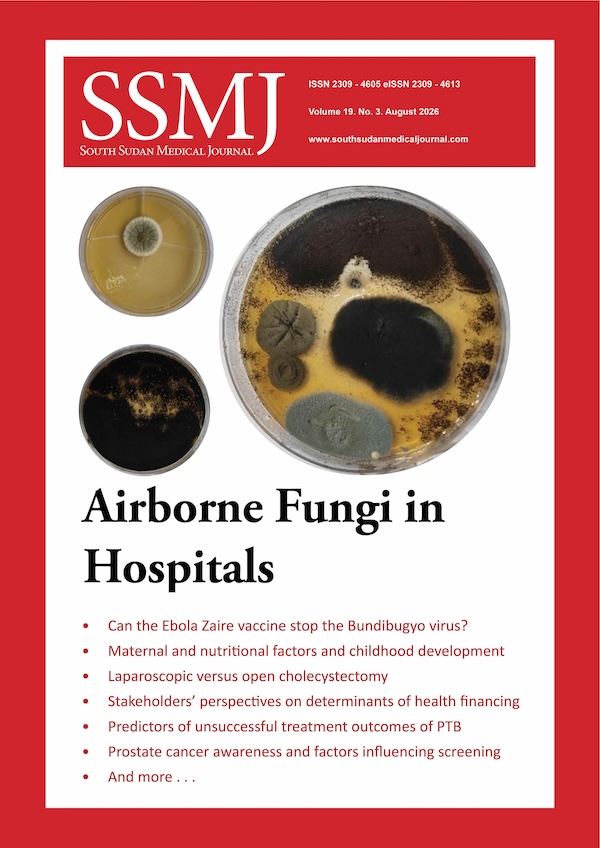
Vol 19. No 3. August 2026
EDITORIAL
Ebola vaccines:
Can the Ebola Zaire vaccine stop the Bundibugyo virus?
Dr Edward Kenyi
Editor-in-Chief
South Sudan Medical Journal
The current Ebola outbreak in the Democratic Republic of Congo (DRC) has officially become the fastest-growing on record, with the World Health Organization (WHO) reporting more than 5,200 confirmed cases and 2,600 deaths in the country as of August 12, 2026. Despite the valiant efforts of health workers, community mobilization, and international support, the Bundibugyo virus continues to wreak havoc in the DRC and poses a threat to neighbouring countries.
One public health tool for dealing with outbreaks is vaccination. Ebola vaccine candidates were developed over a long period by different companies, including the Wellcome Trust, Merck, and GlaxoSmithKline. These vaccines were mainly being developed against the dominant Ebola Zaire variant.
When the Bundibugyo virus strain outbreak occurred in the DRC, the question was whether the Merck vaccine could be deployed against it.
Lui Hospital and the Beginning of a Modern Health System in the Greater Mundri Counties
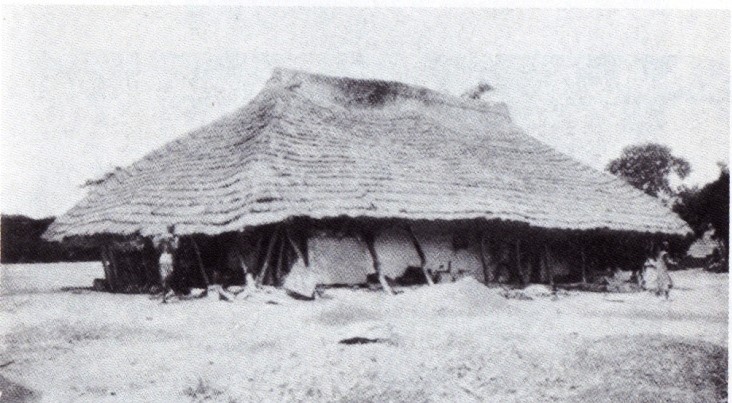
In Greater Mundri, erstwhile Amadi District, the Lui Hospital and modern health system came into being from 1921. Dr. Kenneth Grant Fraser (Scottish), his wife Eileen Charlotte Fraser (Irish) and his sister-in-law Alice Galbraith (Irish) were members of the Church Missionary Society (CMS). Their coming to Lui was inspired early in their lives before they were married.
For Dr. Fraser it was the ambition to emulate Dr David Livingstone, the famous missionary doctor, who gave his life to healing Africans in southern Africa. For Eileen it was to fulfil a childhood dream of teaching black African children. This story covers their pioneer works in the introduction of modern medicine to a health system in Greater Mundri, together with their successors until the hospital was taken over by the Sudan Government in 1958.
After qualifying in their respective fields, they were married but before they could settle down as a couple they had to go to the war, the World War I. Fraser as a medic in Turkey and Eileen as a volunteer nurse in France. After the War, Fraser specialized as a surgeon and both joined the CMS and went to the Sudan. Before sailing Fraser succeeded to obtain medical equipment and medicines from friends sufficient to start healing immediately.
In the Sudan they were directed by the missionary-in-charge to go and start work in Amadi District (Moru land) which fell in the CMS Sphere of Operation but had had no missionary activity. In the District they arrived at Lui, the village of Sub-chief Yilu on 22 December 1920. At the time of their arrival there were still no roads, except tracks; no schools; no health service in the district and therefore modern western medicine was unheard of. The subsequent story relies heavily on the book by Mrs. Eileen Fraser “The Doctor Comes to Lui.”
Download the full story pdf here.
Author Email: [email protected]